
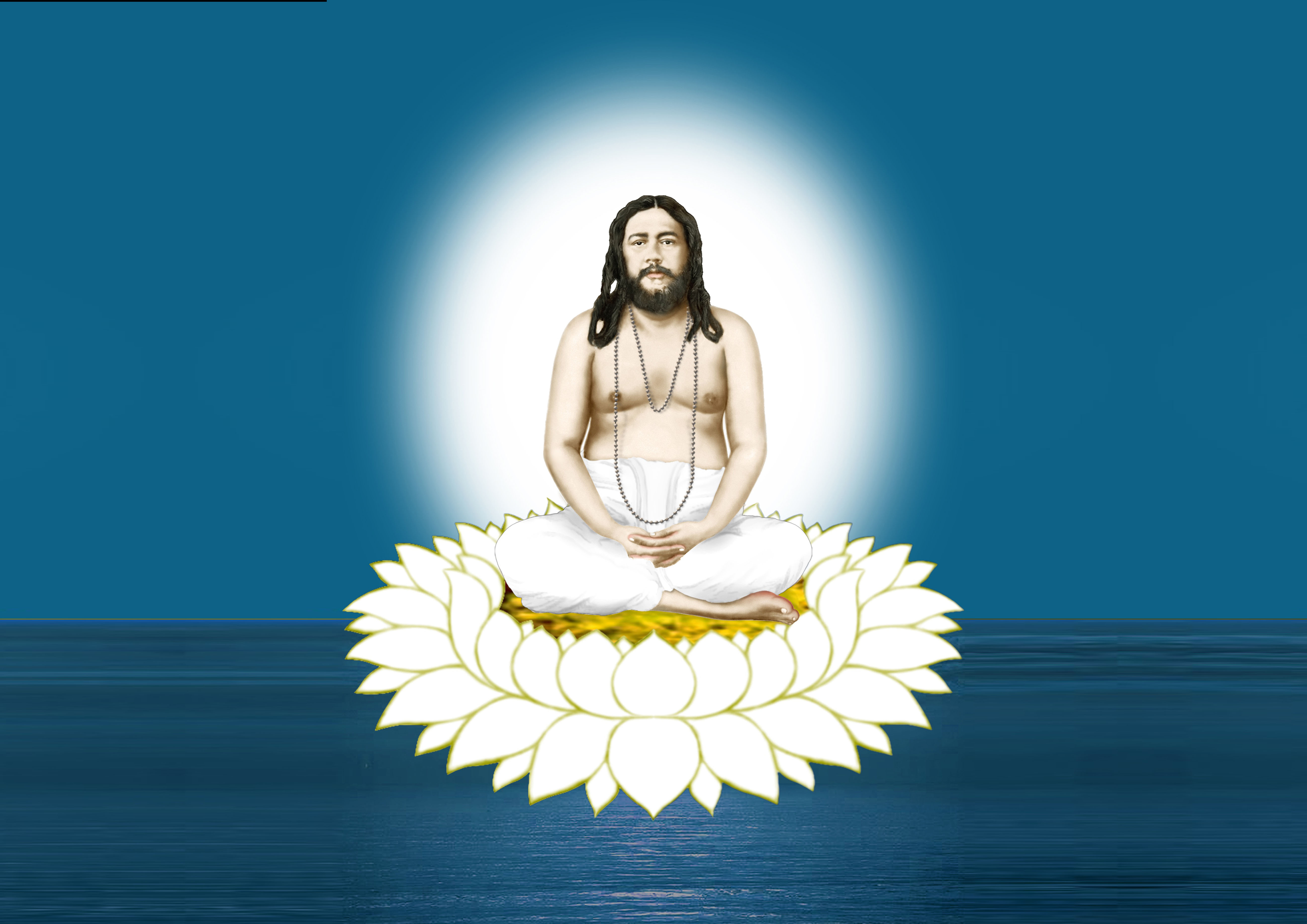
Gyana / Jnana: Knowledge of the Self
Seeking knowledge of the Self
But later on, Nalinikanta became discontent as the form of Sudhansubala eluded physical contact with him. Moreover, Nalinikanta observed in disappointing wonder that that form would materialize out of his person no sooner than he wanted to see Her but would melt away into the same whenever he tried to hold Her in embrace. He was puzzled by this highly tantalizing experience. He began to wonder, "If ‘Mahashakti’ originates from me only, then who am I?"
Overpowered by a consuming desire to know his ‘self’, Nalinikanta sought the advice of guru Bamakshepa. The latter advised him to attain the knowledge of ‘Advaita’ from a Vedantic guru. He became a disciple of Guru Srimat Swami Satchidananda Saraswati at the holy place of ‘Pushkar’ in the state of Rajasthan. He instantly realized that Swami Satchidananda Saraswati was the sadhu who gave him the ‘Tara’ mantra in his dream. The swami initiated Nalinikanta into the arduous practice of Sanyas (renunciation) and in due course named him ‘Nigamananda’, in consideration of his sound comprehension of the Vedic (nigama) knowledge (jnana) with facility.
Knowledge and devotion
Srimat Swami Nigamananda Saraswati Dev had espoused the essence of the all-inclusive Sanatan Dharma in his ideological as well as methodological maxim " 'Shankarer Mata' and 'Gouranger Patha' ". It speaks of a harmonious blending of highest enlightenment (Jnana) and universal love (Bhakti).
Attaining Jnana (Atma jnana) through Bhakti (devotion/seva) is the integrated ideal that has been reinforced by Swami Nigamananda Dev for the seeker in this age. 'Jeeva - the individual soul, is Brahma - the Supreme Soul' or "Aham Brahmāsmi" - this Vedantic doctrine of the 8th century spiritual reformist Sri Sri Adi Shankaracharya is what a man on the path of spirituality needs to realize to know himself and to know God. And according to him, the royal road to attaining this ultimate spiritual goal is the path of devotion adopted by Sri Chaitanya Dev, the 16th century avatara of devotion.
Sources and attribution
Source text: NSS website. Original article author not credited in the source.
Reproduced from the existing NSS website; no separate reviewer or review date is recorded.