Nirvikalpa Samadhi: Meaning and Thakura's Realization
What does Nirvikalpa Samadhi mean in the Biography?
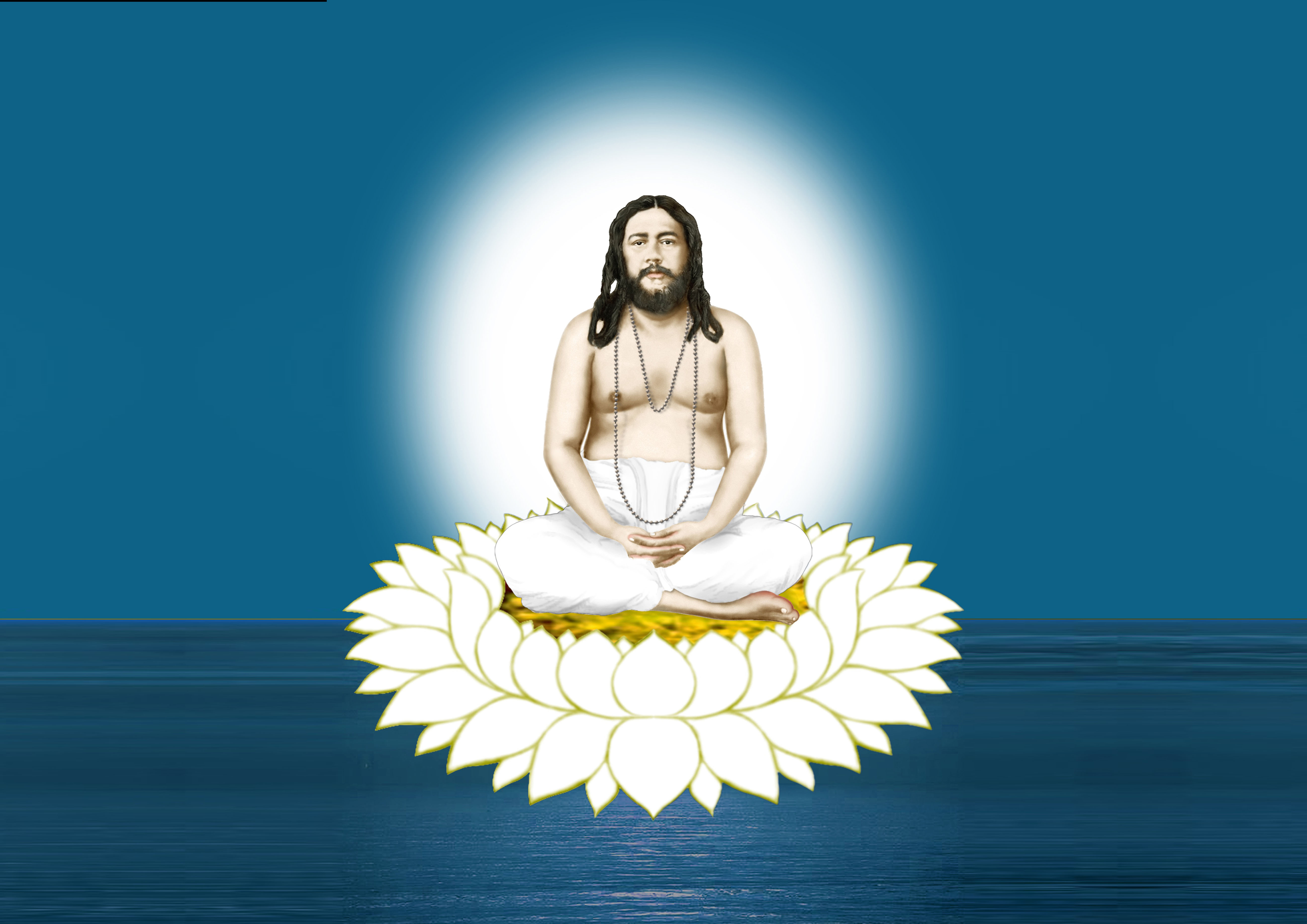
On the advice of guru Satchidanda, Nalinikanta went to attain the direct experience of this Vedic truth through yoga. Led by providence, Nalinikanta was able to find his yogi guru Sumeru Dasji most dramatically, in the thick and inaccessible forests near the holy place of ‘Parasuram’ (in the north-eastern India). After completing ‘yoga sadhana’ (practice of yoga) under the masterful guidance of yogiraj Sumeru Dasji, he attained the state of ‘Nirbikalpa Samadhi’ (non-dual existence/complete identification with the Cosmic Soul or the Parambramha), at once pervading the universe and transcending it. He came back from that blissful state with the realization that he is the ‘universal guru’ i.e. the ‘supreme soul’.
He then found the most satisfying answer to his query, "Who am I?"
The quest for Truth
Nalinikanta became desperate to know all about the subtle phenomena of life and death. Thoughts such as - "What’s death? How can I conquest death? How can I establish a connection between both the worlds?" - began to worry him all the time. This inquest took him to the Theosophical Society at Adyar, in Chennai, India. He learnt all the theories and practices that Theosophy could offer and was able to talk to Sudhansu Devi through a medium. But, Nalinikanta could not see her physically. He was not satisfied with the experience at all. Through a discussion with the members of the Society he came to know that the knowledge about the phenomena of ‘life and death’ was the prerogative of the Hindu Yogis. He spared no time in looking for a true Yogi or Sadhu who could fulfill his desire to meet his dead wife as well as bring contentment to his seeking mind.
While searching for a true Yogi, Nalinikanta came across Swami Purnananda, a highly educated renunciate. The Swami explained to him that all female beings are merely a partial manifestation of the ‘Mahamaya’ or the ‘Cosmic Mother’. Hence, it was extremely unwise on his part to run after an insignificant part (his wife) ignoring the whole (the Cosmic Mother). If he could get Mahamaya, he would automatically get his wife and there were sure ways to get Her. Swami Purnananda advised him to look for a ‘Sadguru’. Nalinikanta returned to his place of service a changed man. The belief in ‘life after death’ and ‘soul’ had turned him into a believer. He was desperately praying God for a chance to meet his destined Sadguru.
Tantra and the search for the Self
One night Nalinikanta saw one Sadhu with a brilliant aura around him in his dream. He woke up to find the Sadhu standing beside his bed in ‘reality’. The Sadhu handed out to him a ‘bilwa’ leaf bearing a mantra written on it and then disappeared. Nalinikanta was spellbound by the incident. He did not know what to do with the mantra. No sadhu or spiritual teacher, whom he consulted, could decipher the mantra nor could they give him any guidance about what to do with it. At this point of time a crestfallen Nalinikanta received directions in his dream to go to the greatest Tantrik Guru of that time - Bamakshepa, at the ‘Tarapeetha’ of Birbhum, in West Bengal. Bama was extremely pleased to see the unique ‘Veeja Mantra’ (root/source mantra) of Goddess Tara which Nalinikanta had received in his dream, and readily accepted him as his disciple. Within a short span of one month, Nalinikanta was able to master the secrets of the Tantrik ways (tantra sadhana) of attaining spiritual success. As a mark of perfection of his sadhana (spiritual practice), ‘Tara’ or ‘Mahashakti’ (the embodiment of cosmic energy) appeared before him in the form of his wife Devi Sudhansubala and granted him the boon that he would be able to see Her in that form whenever he would so wish.
But later on, Nalinikanta became discontent as the form of Sudhansubala eluded physical contact with him. Moreover, Nalinikanta observed in disappointing wonder that that form would materialize out of his person no sooner than he wanted to see Her but would melt away into the same whenever he tried to hold Her in embrace. He was puzzled by this highly tantalizing experience. He began to wonder, "If ‘Mahashakti’ originates from me only, then who am I?"
Vedantic guidance and Yoga
Overpowered by a consuming desire to know his ‘self’, Nalinikanta sought the advice of guru Bamakshepa. The latter advised him to attain the knowledge of ‘Advaita’ from a Vedantic guru. He became a disciple of Guru Srimat Swami Satchidananda Saraswati at the holy place of ‘Pushkar’ in the state of Rajasthan. He instantly realized that Swami Satchidananda Saraswati was the sadhu who gave him the ‘Tara’ mantra in his dream. The swami initiated Nalinikanta into the arduous practice of Sanyas (renunciation) and in due course named him ‘Nigamananda’, in consideration of his sound comprehension of the Vedic (nigama) knowledge (jnana) with facility.
Prema/Bhav after realization
But, Nalinikanta had to be initiated into the mysteries of being in love with ‘God’ (prema/bhav sadhana) by ‘Gauri Ma’, a female sadhu of unique spiritual merits. She taught him how the Supreme Soul is both transcendental and playfully active in the universe. He understood that ‘he’ was to initiate mankind in this ‘mantra’ of ‘devoted love’ for God.
Thus Nigamananda became perfect in Tantra, Jnana, Yoga and Prema/Bhav, all the four ways envisaged in Sanatana Dharma (ever new/eternal, and universal spiritual principles based on Vedic knowledge) to reach the highest spiritual goal. During the 1905 Kumbha Mela at Ujjain, Swami Satchidananda Saraswati conferred the title of ‘paramahansa’ on Nalinikanta in recognition of his spiritual merits in a huge gathering of leading sadhus and renunciates under the auspices of the then Shankaracharya of Sringery Matha.
Sources and attribution
Source text: NSS website. Original article author not credited in the source.
Reproduced from the existing NSS website; no separate reviewer or review date is recorded.